
See also
Hotels in Losinj Island
Dalmatian coast is one of the last Mediterranean regions where it's quality that matters, not mass tourism. On the Adriatic coast of Croatia you can find apartments in various sizes with their own plot of land and sea view, ideal weather from April to October.
You've arrived on the Dalmatian coast, one of the last Mediterranean regions where it's quality that matters, not mass tourism. There is simply nowhere else like it on the Adriatic for sea quality.
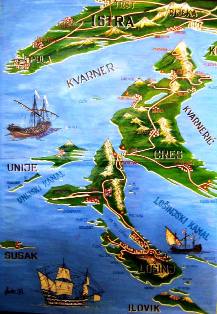
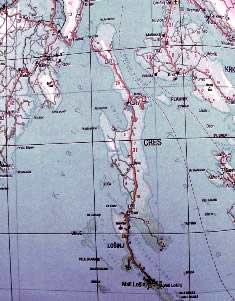
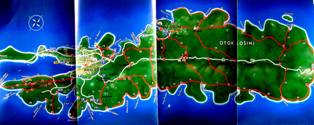
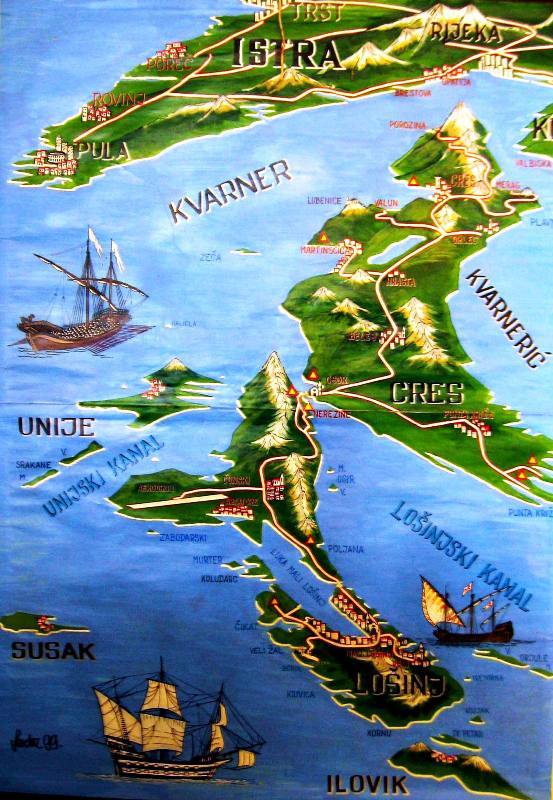
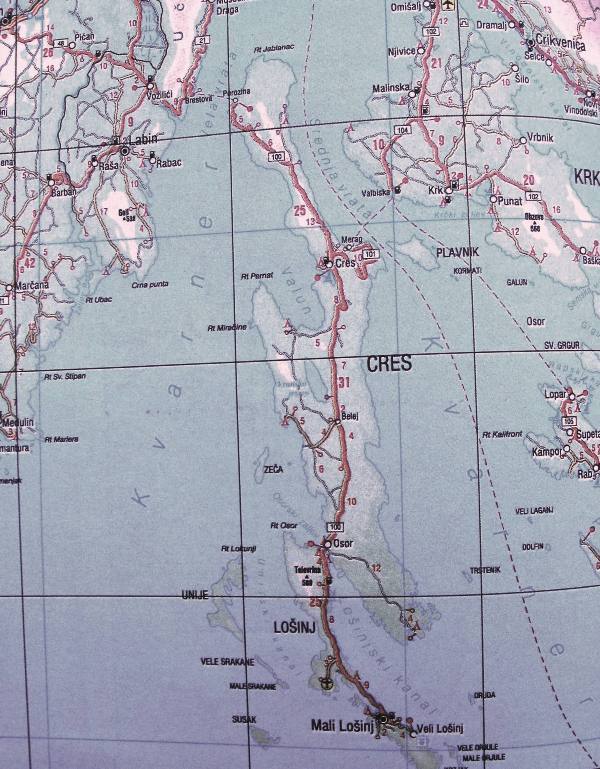
Island Cres Map
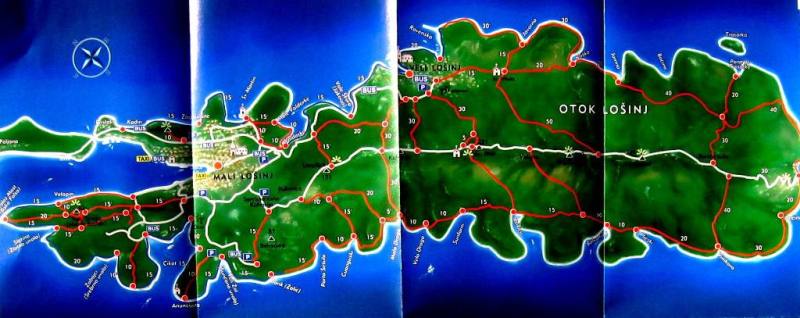
Walk from Mali to Veli Losinj
A walk in the evening hours in the hot summer can be very relaxeing for tourists who are on their holidays. From Mali Losinj to Veli Losinj is only 5 kilometers. We can go to walk on the beach walking path or we can slowly cycle on the coast road.
In both cases we will be enthusiastic by the nature of island Lošinj and beautiful colours of the sea in hidden bays. At the end we can stop in the reastaurant of the hotel Punta - here we can enjoy gorgeous view to the sea and harbour of Veli Losinj.
Losinj island hotels
We can start the walk on the promenade of Mali Losinj. On the way we see a lot of remarkableness of settlement for example the statue of Apoxyomen, which divers found in the sea in vicinity of island Losinj.
A prominent hotel Apoksiomen has its name after this statue. The hotel lies right in the middle of the promenade in town Mali Lošinj Croatia. At the end of the town we can follow the direction signs for Veli Lošinj. Now we must found the path near the sea and follow it through bays and small sandy or rocky beaches right to hotel Punta. We ascend right up to belvedere platform with a nice restaurant, from where we can admire a beautiful view on a little harbour of Veli Lošinj Croatia. Only 200 m away is positioned harbour of Veli Losinj. The town of Veli Losinj is known for its alleys, a small and nice pier which is very popular by tourists. There you can take a rest an sit down on the square of the town in coffeehouses.
Close the restaurant is situated Hotels and Aparments Punta. They are only 50 meters far away from the sea. The hotel complex is usually open throughout most of the year. Near hotel we can find tennis courts, bike hires, diving center, and other opportunitys for sports and fun.
Veli Losinj settlement
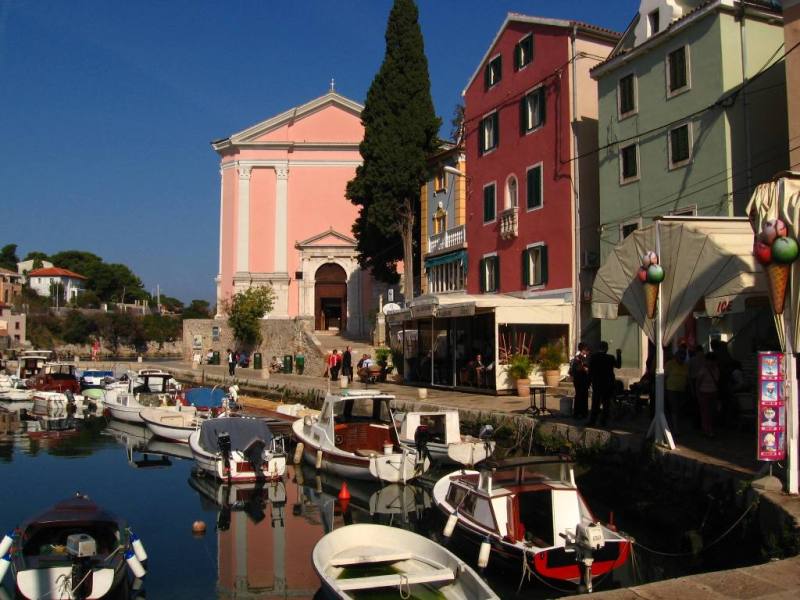
Veli Losinj town is located in a narrow bay on the southeastern side of the Croatian island Lošinj, at the foot of St. John's hill. The high houses around the port and the numerous villas with nice gardens are the main characteristics of Veli Lošinj. With its 1000 inhabitants the town is the second largest settlement on the island. It is worth to know that once Veli Lošinj (Velo selo, i.e. »big village«) was bigger than Mali Lošinj (Malo selo, i.e. »small village). Later Mali Losinj was developed faster so today the situation is reversed, nevertheless their names remained the same. While walking along the narrow street of Veli Losinj, through the garden gates(»portuni«) you will be able to see the splendid villas of former captains, shipowners and the rich upper class.
In the gardens of these villas there is a collection of some 80 species of plants, while in the town park, in front of today's spa and one time residency of the archduke Carl Stephen, there are some 200 plant species. In the proximity of Veli Lošinj is the small fishermen's of Rovenska, which attracts visitors wiht its beautiful beach, its atmosphere and its tradition of people that have dedicated their lives to the sea.
Flora of Losinj Island - Croatia
 The gentle climate of the island Lošinj is seen in its richness of plant types. According to research, about 1018 plant types were identified, of which 939 belong to the autochthonous flora. 230 of these plants fall under medical herbs. About 80 types of plants, mainly exotic plants, were brought from other parts of the world. Here grow agaves, Mexican cactus (opuntia), palm trees, magnilias, mirth, pistachios, mimosa, fig tree from India (kamus-nassarah), lemon, orange and mandarin trees. From the mos famous and most prevailing we have sort out rosemary, lavander, sage and myrtle.
SAGE – heals the most of abscess. It refine respiratory organs, cures laryngitis and almods. The mouth washing with sage will preserve your teeth in good condition and prevent the halitosis. Sage tea is smoothing the nerves and relax the muscies.
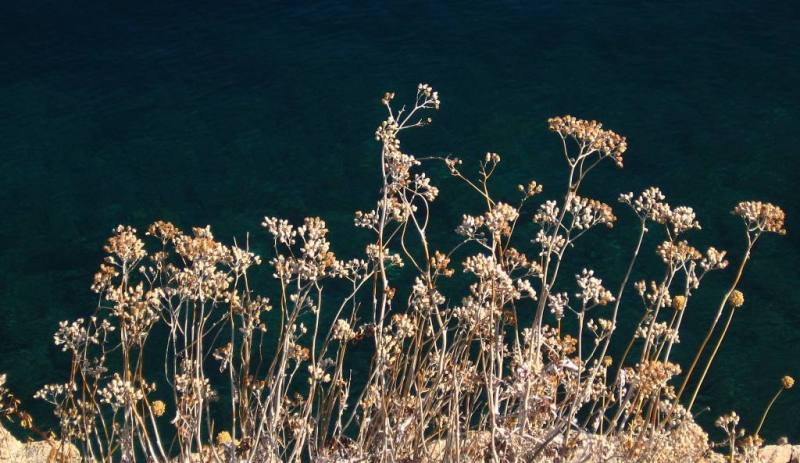 MYRTLE - is using for acne and bold skin tretment, varicose3 veins and haemorrhafe. Myrtles essential oil is providing elasticity and moisture to the skin.
Apoxyomenos of Losinj
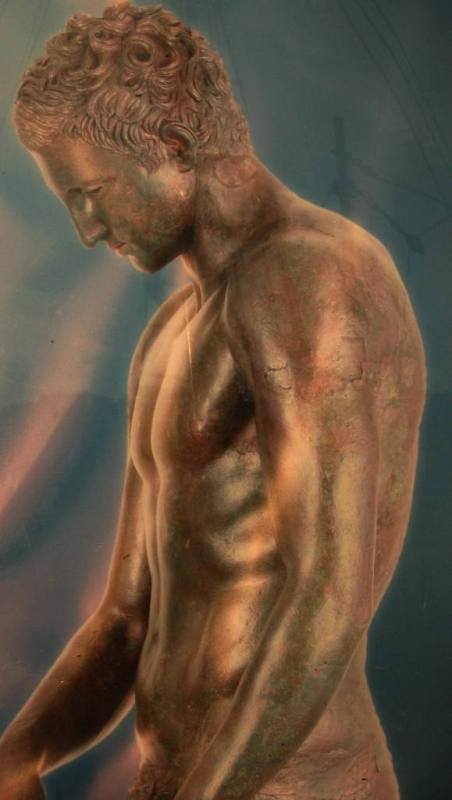 APOXYOMENOS (2nd – 1st century B.C.)
The antique bronze statue of an athlete, 192 cm tall, taken from the sea bed between the islet of Vele Orjule and the island of Lošinj on 27 April 1999, is the only large bronze found to date on the eastern coast of the Adriatic. It is assumed that it was deposited in the sea at the beginning of the 1st century when it was thrown overboard during bad weather because of the danger of the ship overturning or as a sacrifice to the gods for safe passage through the Osor channel to a prosperous destination, port of call on the north Adriatic.
The statue represents an athlete, ayoung sportsman, at the moment of cleaning oil, dust and sweat from his body with a scraping tool after a competition. During restoration, which lasted 7 years, analysing the material and stlye of wokmanship, the statue was dated from the 2nd – 1st century B.C. while the prototype on which it was made is considerably older, from the middle of the 4th century B.C. From eight well-known variation of the Apoxyomenost prototype (the most famous being the bronze statue from Kunsthistorisches Museum in Vienna, discovered in 1896 in Ephesus) the Lošinj statue is the most perfect and best-preserved. The statue's sculptor is unknown but the classical beauty and high quality of wokmanship testify to a consummate craftsman. Restoration work on the museum where Lošinj's Apoxyomenos will be in year 2009 permanently displayed to the public, is at present being carried out.
Read more about island Cres and Losinj ..page: 1 | 2 | 3 | 4 |