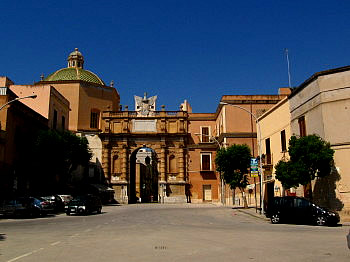
Marsala Sicily
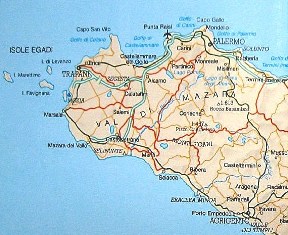
Marsala is the town with the largest population in the provice of Trapani. It lies on Cape Boeo, otherwise known as Cape Lilybaeum, at the westernmost tip of Sicily. The economy of the place is based mostly on wine-growing (strong, sweet Marsala wines are famous), commerce and a certain amount of industry.
The place where the present town stands was probably a Sicanian site. At the beginning of the fourth century B.C. The Carhaginian Lilybaeum took place of nearby Motye. Later a Roman possession and flourishing in the Middle Ages, the town derived its name from the Arab words Marsa Ali (port of Ali). Taken over by the Normans in the twelfth century, it later passed to the House of Aragon; in the sixteenth century the importance of Marsala declined considerably as a consequence of the artificial earthing up of its port, which was done to defend the city against the constant attacks of pirates. Marsala and its commerce returned to their old splendour in the eighteenth century, when the English promoted activities and trade connected with wine production. The legendary »Landing of the Thousand« on the 11th May 1860 In May the town is the scene of the Fiera del Vino dei Paesi Mediterranei (Mediterranean Countries Wine Fair). Visits to wine-cellars and producers are enjoyed by tourists.
In 1833, the entrepreneur Vincenzo Florio, a Calabrese by birth and Palermitano by adoption, bought up great swathes of land between the two largest established Marsala producers and set to making his own vintage with an even more specalised range of grapes. At the end of the 19C, several more wine-growers joined the competition, including Pellegrino (1880). After the turn of the century, Florio bought out Ingham and Woodhouse, and retained the two labels. Florio in turn succumbed to a takeover by a conglomertion of other producers; again the famous, well-established, labels continued to be made and marketed
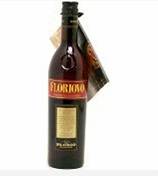 The wine Marsala
is registered as a DOC wine (a Sate-designated label of controlled quality); this means that production is restricted to an ewxlusive area around Trapani, and a collection of additional vineyards in the provinces of Agrigento and Palermo. Only grape varieties with a high natural sugar content are used to make Marsala: these, once pressed, are left to ferment, and/or caramelise, before being blended with ethyl alcohol to produce the different types and flavours of Marsala. Relative to the sugar content, Marsala may be categorised as dry, semi-dry or sweet. Its main denomination, however, is relative to the length of time it is left to mature: Marsala Fine (1 year), Superiore (2 years), Superiore Riserva (4 years), Vergine (5 years) and Vergine Riserva (10 years). Dry Marsala is usually served as refreshing aperitif (below 10 C) while the sweeter forms are drunk as a dessert wine (no more than 18 C).
Veal medallions with a flamed Marsala sauce recipe.
What do you need for Marsala sauce: 12 veal scallops, pounded out thin; 1/4 cup Parmesan cheese, grated; 1 ounce butter cut into small pieces; 1/2 medium lemon, squeezed for juice; 1/3 cup dry Marsala; 1 teaspoon parsley, chopped
How to do Marsala sauce:
In the kitchen place veal medallions between two sheets of heavy plastic wrap and flatten to 1/4-inch thickness. Coat veal lightly with parmesan chease, remove veal and place on a plate.
Light the burner and adjust the control to moderate heat.
Place the flambe pan on the burner and add butter. When butter melts, saute veal medallions and brown lightly on both sides. Squeeze the lemon juice through a clean white napkin, over the veal. Add Marsala wine, ignite and cook for 1 minute, turning veal several times, mixing the sauce thoroughly. Arrange 4 veal medallions on each plate. Cover with sauce. Sprinkle with chopped parsley and serve.
Prearrange your favorite starch and vegetables on dinner table family style before putting on a show.
Chiken marsala recipe
50g butter, 1.1kg chicken pieces, flour, peper salt, 2 onions. 1 tablespoon grated green ginger, 2 cups water, 2 chicken stock cubes¼ cup marsala,¼ cup cream. 2 tablespoons chopped parsley Lighly coat the chicken pieces in flour seasoned with salt and pepper. Melt the butter in a hot pan. Lightly brown the chicken pieces then remove them from the pan. They will cook in the Marsala sauce! Add peeled and finely chopped onions and ginger to the pan them over medium heat until the onions are transparent. Add water, crumbled stock cubes and Marsala wine. Bring the sauce to the boil; reduce the heat; return the chicken pieces to the pan, cover; simmer, stirring occasionally, for 30-45 minutes or until the chicken is cooked. Remove the chicken from the pan, bring the sauce to the boil, stirring until it has reduced slightly. Reduce the heat, stir in the cream and parsley and pour over the chicken. Serve with your favorite side dishes - from pasta, bread to potato with vegetables or salad.