
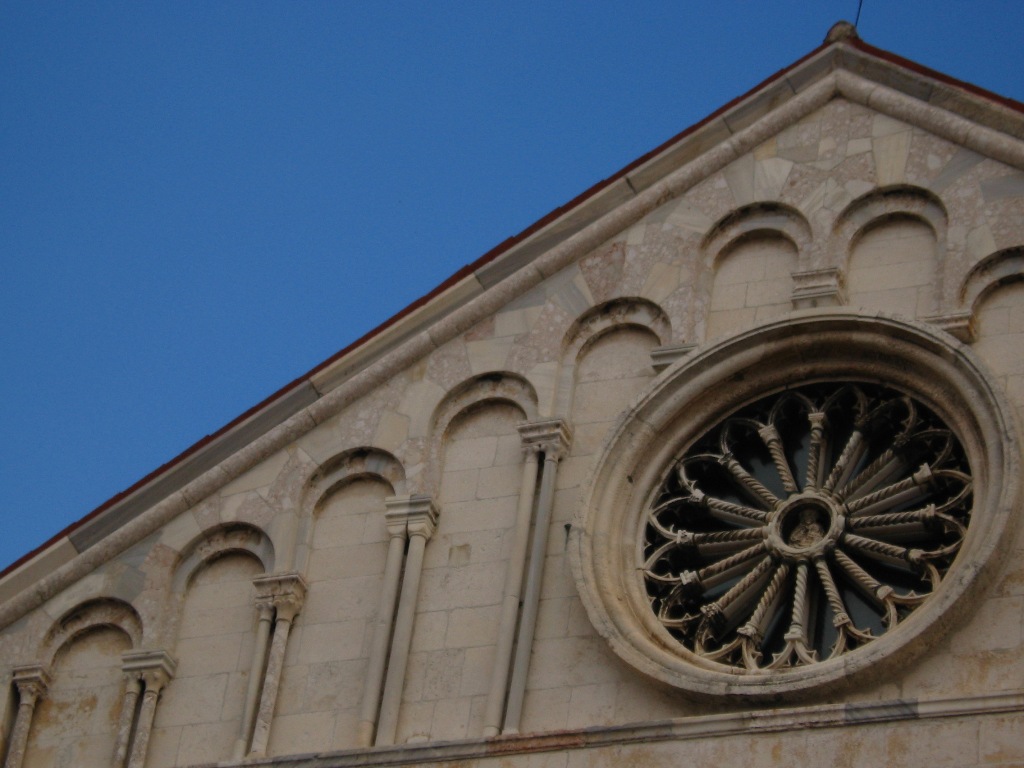
Historical core of the city
., was created over a longer period of time by a number of reconstructions and constructions of various, mostly public buildings.
At this place, in the axis of the main city street (the ancient decumanus maximus), there was the main entrance into the city by land, in the Roman and mediaeval times.
The Roman gate was built as a monumental triumphal arch with three openings and flanked by two octagonal towers. The remnants of the northern side door have been preserved until the present. A part of the Roman rampart, built of massive stone and roughly cut blocks, with one smaller door, can be seen on the southern side, within the rear wall of the Captain's Palace.
 East of the Roman rampart
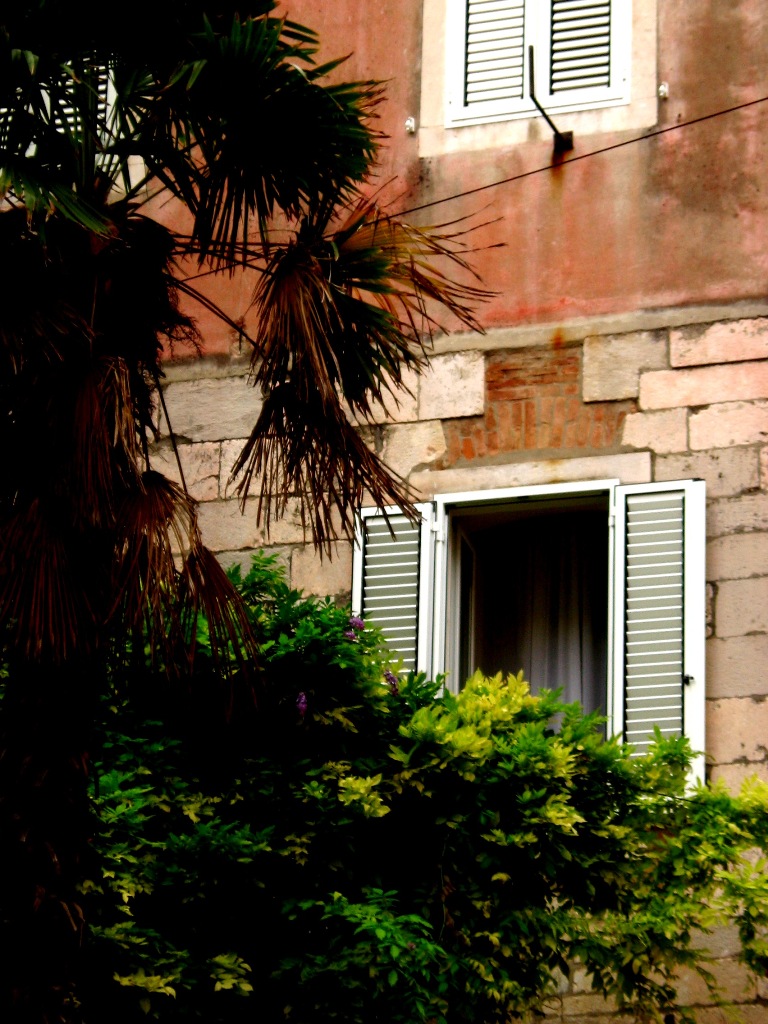
.. there are the remnants of a primitvely builst, early mediaeval wall. Several metres away, east of this wall, there is a part of the preserved mediaeval crenelated rampart from the 13th century.
On its northern side there is a pentagonal tower from the same period, the only one that has been preserved. The top of the tower with a terrace was added in the 17th century. A circular observation post was subsequently built.
Until the construction of the Renaissance ramparts in the 16th century, below the mediaeval walls there was a moat. During the 1570s, the construction of a pentagonal massive bastion was finished.
That bastion was used for military puposes until 1829, when it was demilitarised and transformed into a municipal landsape park.
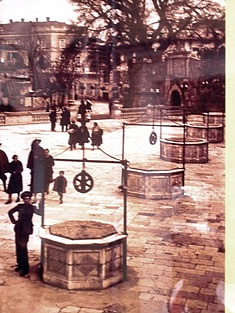
 Five wells square
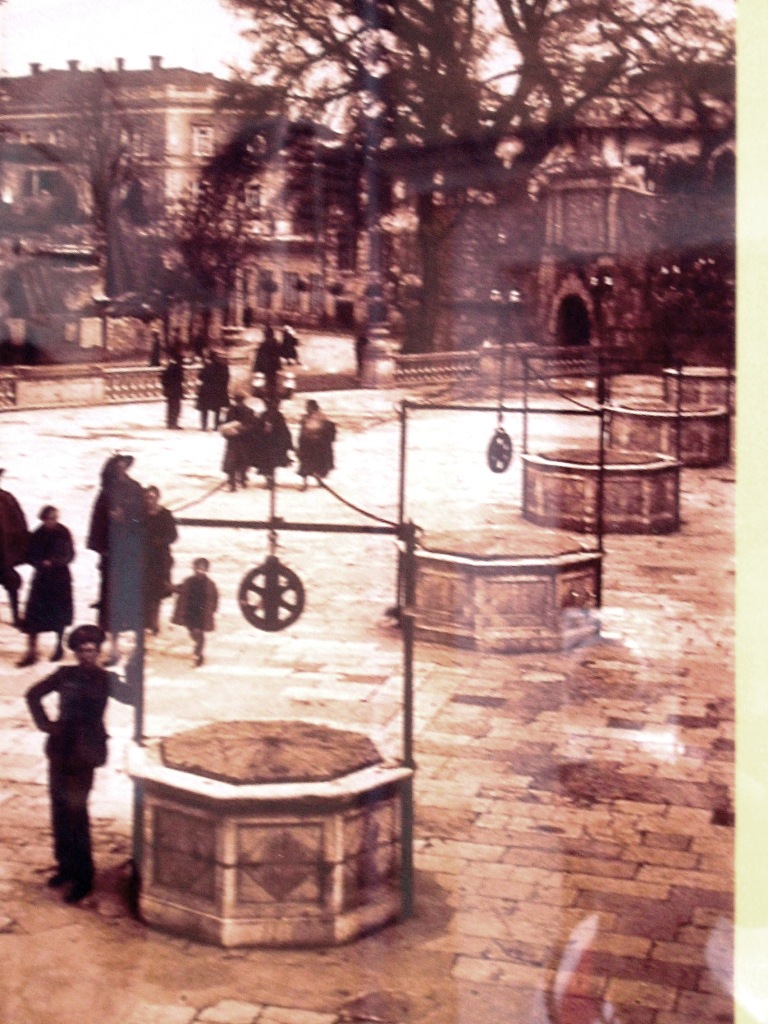
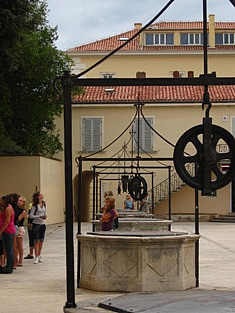
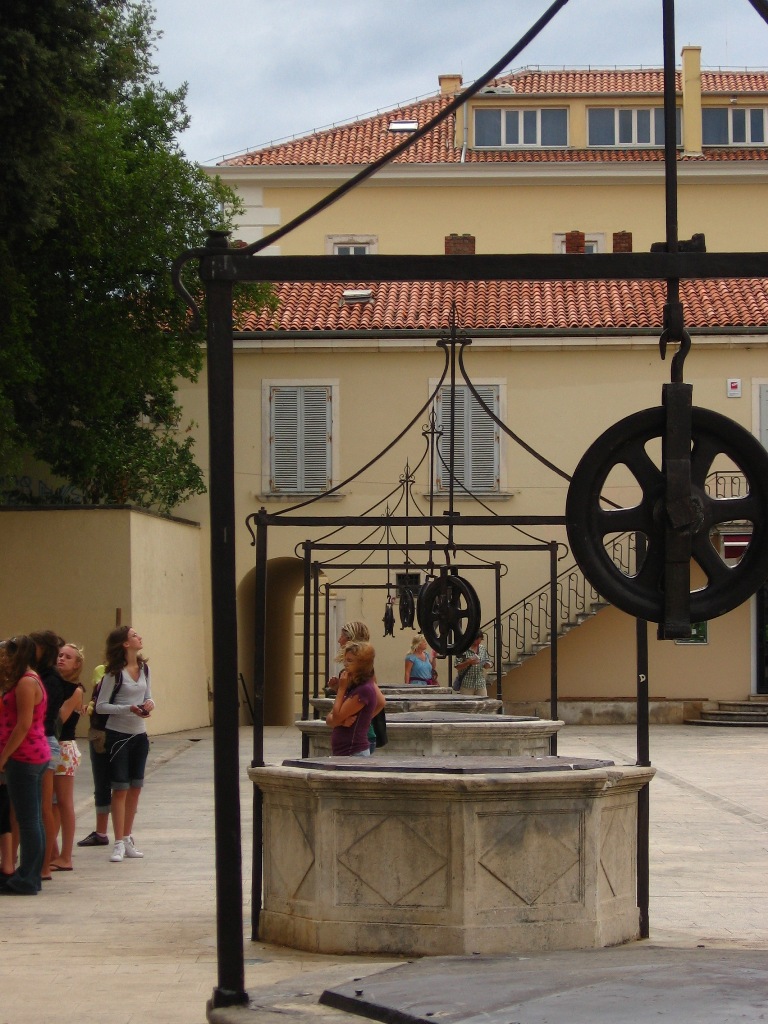
During the construction of the bastion, on the location of the earlier mediaeval moat, a huge underground water tank was built, with five wells, after which the square was named. In the 19th century this area became the favourite meeting point of the citizens of Zadar. Accordingly, it was renovated on several occasions, with fountains and other facilities. The latest renovation was also performed in that style.
Developed parts of the Plains on the southern and western side are formed by the Baroque fronts of the Armament building and the Regent's Palace.
The Roman column, made of fragments of the columns on the Forum temple, on the northern side of the Plains i.e. at the end of the main city street, was erected in 1729 BC, which could be seen in its typical town planning in the best tradition of the Roman arcitecture of military camps (castra).
Longitudinal (decumani) and transversal (carda) streets intersect at rights angles, forming thus rectangular residential and public blocks of the city ( insule)
 At the intersection of the street
..At the intersection of the main longitudinal street ( decumanus maximus) and the main transversal street (cardo maximus) there was usually the centre of public and community life, a forum, which was aslo built here in Zadar, in the period from the second half of the 1st century until the beginning of the 3rd century. On the basis of the existing remnants, which have been preserved until the present and thoroughly researched, unfortunately due to the extensive ravages of war during 1943-1944, the original appearance of this complex and the most monumental architectural composition in the ancient town could be reconstructed.
The open central square (lestricat), of ample dimensions, and this one is the biggest on the eastern Adriatic coast (95 x 45 m), was enclosed by a three-storey porch (porticus) on its southern, eastern and northern sides.
The porch was two steps higher than the forum oval and consisted in a range of massive marble columns with classical bases and composite capitals supporting the separating conrice of the gallery, which was adorned with floral festoons and masquerons. On the eastern and northern side, open toward the porch, there were tabernae, typical rectangular shops or offices of that time. In the south- eastern corner there was the nympheum.
 The municipal basilica
.. with, semicircular exedras on its western and eastern side, leaned on the southern part of the forum porch. Two massive votive columns (the southern one has been preserved until the present) on the eastern side of the open square or the forum oval marked the crossing into the cult zone of the complex the capitolium. In the middle of the capitolium, enclosed from the north, west and south by the peribolus with a double row of columns, there was the temple dedicated to the capitolinian triad of Jupiter, Juno and Minerva. The temple was prostyle, hexastyle, with the open protyron, consistin of a double row of six columns, and three closed temple rooms ( cellas) for cult statues, in the rear, western part. Between the temple front and the fence of the elevated capitolium opposite the forum oval there was an altar. With the rise of Chistianity, as early as the 4 century, certain parts of the forum were rebuilt, especially in its northern section, where a new spiritual centre of the city, an episcopal complex, was gradually formed.
 Parts of the architectural structures
.. of the original forum have been preserved in the newly built buildings, in the cathedral, the baptistery, the catechumeneion (today sacrits). St. Daonatus, the episcopium. St. Elias's Church, built on the capitolium as early as the Middle Ages, was bestowed upon the Serbian Orthodox community of Zdar in the second half of the 18th century, when it was redecorated in the Baroque style, and a belfry was added on the eastern side.
In the Middle Ages, the open area of the forum oval was replaced by a new square known as Campa, on the southern side of the forum. A considerable part of the forum remnants was discovered during clearing of the rubble after the Second World War and after wxtensive reasearch and conservation works. Visible remnants include those of the oval, the porch, tabernae, the basilica and the capitolium with the temple.